Knowledge Graph
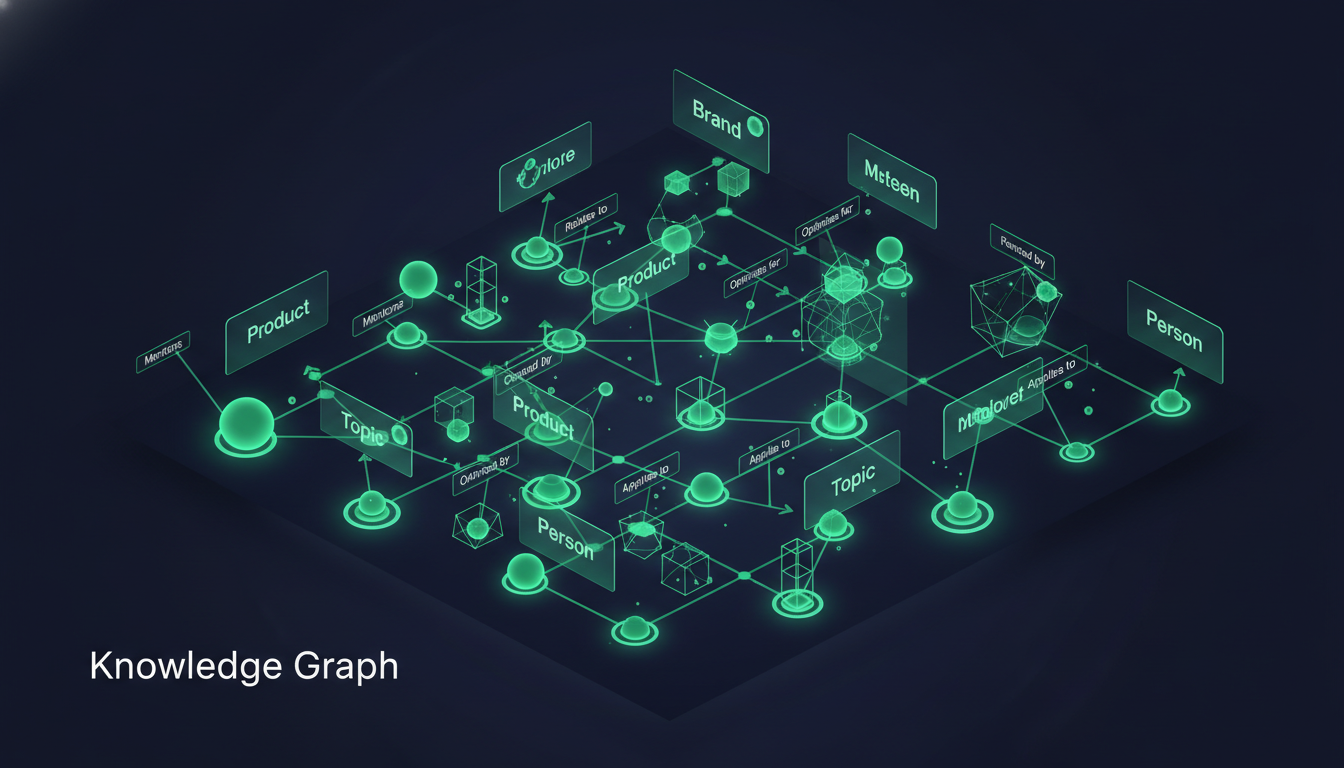
A structured database of entities and relationships that machines can understand, representing real-world concepts and their connections.
A Knowledge Graph encodes the world (or a slice of it) as entities (people, brands, products, concepts) connected by typed relationships (founded by, located in, competitor of, made of). Where a database stores rows and columns, a knowledge graph stores meaning - the fact that OpenGraphy is a brand, that it operates in the GEO category, that GEO is a child of marketing technology, and that all of that is verified by sources. Google's Knowledge Graph powers Knowledge Panels and disambiguation in classic search. The same pattern now sits beneath every major LLM: when ChatGPT, Gemini, or Claude reasons about your brand, it implicitly traverses entity relationships it learned during training and re-grounds them through retrieval. For a brand, the practical question isn't 'do knowledge graphs matter,' it's 'is my brand a clean entity - correctly typed, consistently described, and strongly connected to the right neighbors?'
Key takeaways
- 1A knowledge graph is the structural memory layer beneath modern AI - entities and relationships, not pages and keywords.
- 2Brands that exist as clean, well-connected entities get correctly cited; ambiguous or thinly described brands get confused with competitors or omitted.
- 3Wikipedia, Wikidata, Crunchbase, LinkedIn, and Schema.org markup are the highest-leverage sources for influencing how AI models build your entity profile.
- 4Entity consistency across the web is non-negotiable - mismatched names, descriptions, or categories degrade your knowledge-graph representation.
- 5The Knowledge Graph battle is won years before a query is asked: it's the result of accumulated, consistent, verifiable signals.
Why Knowledge Graph matters
Knowledge graphs power how AI models understand your brand and its context, directly influencing citation likelihood and accuracy.
When to apply Knowledge Graph
Establishing a new brand entity
Coordinate Wikipedia, Wikidata, Crunchbase, LinkedIn, and on-site Schema.org so the brand emerges as a single, well-typed entity rather than a fuzzy mention.
Disambiguating from a namesake
When a brand shares a name with a town, a movie, or a famous person, deliberate entity work (Wikipedia disambiguation, schema typing, distinctive triples) is what lets AI models reach the right entity.
Mapping the competitive graph
Identify which competitors the AI models cluster you with - and which adjacencies you should strengthen or break to shift category positioning.
Best practices
- Publish Schema.org Organization, Product, and Person markup with sameAs links pointing to Wikipedia, Wikidata, Crunchbase, LinkedIn.
- Maintain identical brand descriptions and categorization across every public profile - even small drift confuses entity resolution.
- Earn mentions on high-trust sources LLMs weight heavily (Wikipedia, top-tier press, expert directories, academic citations where possible).
- Use consistent naming for products, executives, and locations - every variant creates ambiguity in the graph.
- Audit entity health quarterly: pull AI model descriptions of your brand and check for confusion, outdated facts, or wrong typing.
Knowledge Graph and OGY
OpenGraphy treats your brand as an entity, not a keyword. Our Knowledge Graph audit pulls how each major LLM describes your brand, the entities it links you to, and the sources it leans on - then maps the gaps that keep you from being correctly understood. You get a prioritized fix list (schema, consistency, sameAs links, source mentions) instead of generic SEO advice, because entity health is the upstream lever for AI citations. Want to see your entity profile through AI's eyes? Run a free OGY audit and view the full Knowledge Graph diagnosis.
Audit my Knowledge Graph healthKnowledge Graph in context
As AI-powered discovery replaces traditional search, understanding Knowledge Graph is a core competency for modern brands. It sits in the Knowledge Graph family of concepts and directly influences how language models like ChatGPT, Gemini, Claude, and Perplexity surface, cite, and recommend brands.
Knowledge Graph - frequently asked questions
Quick answers to the questions people most often ask about Knowledge Graph.
No, but they connect. Schema.org is the markup vocabulary you embed in HTML; a Knowledge Graph is the assembled, queryable database of entities and relationships built from many sources, including schema-marked pages. Schema is one of the inputs; the graph is the output.
Yes, even more than before. Google's Knowledge Graph informs AI Overviews, and many other AI engines treat Wikipedia/Wikidata as authoritative seed data. A brand that is well-represented in Google's graph carries that representation across most AI surfaces.
There's no 'apply' button. You earn entity status through accumulated signals: a coherent web presence, schema markup, mentions on authoritative sources, and - above a certain threshold - a Wikipedia article. Most brands underestimate how much consistent, verifiable repetition of the same facts is needed.
Yes - at category scope. You don't need to be a household name to be the cleanest entity in a niche category. Many SMBs achieve strong entity representation by dominating coverage of a narrow topic on Wikipedia, expert directories, and consistent on-site schema.
Three actions usually move the needle in a quarter: (1) add complete Schema.org Organization + sameAs markup site-wide; (2) align Crunchbase/LinkedIn/Wikidata descriptions exactly; (3) earn 2-3 high-authority mentions that explicitly state who you are and what category you operate in.
Ask several LLMs the same descriptive prompt about your brand and compare. Drift across models reveals graph weakness. OpenGraphy's audits automate this - they show how each major model describes, categorizes, and connects your brand, and where to act.
Related Terms
Entity
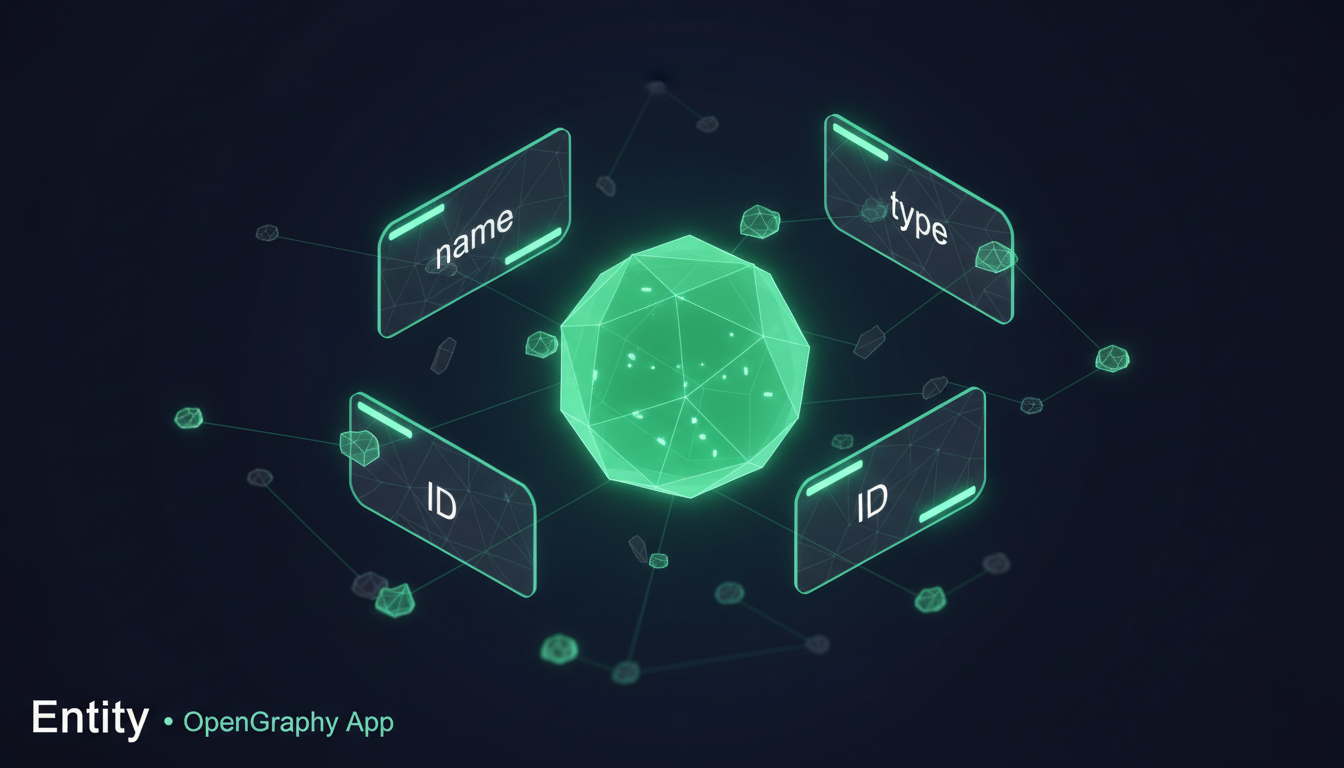
A distinct, identifiable thing, person, place, or concept that can be represented in knowledge graphs and understood by AI systems.

Entity Relationships
The connections between entities in a knowledge graph, defining how concepts, brands, and topics relate to each other.

Schema.org
A collaborative vocabulary of structured data markup that helps search engines and AI models understand website content and relationships.