UGC used to mean "consumer brands sharing customer photos." In 2026 it's a high-leverage B2B format — buyers trust creator-style content over polished ad creative, especially in the consideration stage. The right UGC strategy moves the trust dial measurably; the wrong one leaks brand equity. This guide covers the difference.
The trust gap between polished brand creative and authentic creator-style content has been measurable in B2C for a decade. What surprised most B2B teams in 2024–2025 was how cleanly the same effect transferred to B2B audiences. A short, casual demo video from a real (or convincingly real) employee or customer outperforms a polished produced ad on engagement, completion rate and downstream pipeline conversion — even for software costing $50k+ ACV. The reasons are the same as in B2C: humans pattern-match for authenticity signals, and B2B humans are still humans.
This guide walks through UGC content strategy for B2B brands: why UGC works (with the trust mechanism), how to produce UGC-style content at scale without sacrificing brand integrity, the formats that work in B2B (and the ones that don't), and the measurement framework that ties UGC to pipeline. By the end you should be able to operate a UGC program that compounds trust signals quarter over quarter.
Why UGC Works

The trust mechanism behind UGC is consistent across B2C and B2B: viewers pattern-match for authenticity signals, and authentic-feeling content gets more conversion-oriented attention than polished content does. The diptych below — polished ad on one side, UGC-style on the other — is the pattern your audience is unconsciously running on every video they see.
The trust differential
Studies in 2025 across B2B SaaS audiences showed UGC-style content drove 2.4x higher engagement and 1.7x higher consideration-stage conversion vs. polished ads of equivalent budget. The differential held across price points (from $5k ACV to $250k ACV) and across formats (video, image, carousel). This is no longer a B2C-only effect.
Why it works on B2B buyers
Three mechanisms. Authenticity signals override format — buyers default to "trust this person showing me their actual screen" over "trust this carefully edited brand spot." Real-world demonstration is more persuasive than benefit-claim copy, especially for technical products. Social proof at human scale reads differently from social proof at brand scale — a real-feeling individual recommendation outweighs a customer logo wall.
Where UGC doesn't work in B2B
Top-of-funnel awareness, executive thought-leadership, and high-stakes announcements still call for polished brand creative. UGC is a consideration- and evaluation-stage tool, not a brand-elevation tool.
Creating UGC-Style Content at Scale

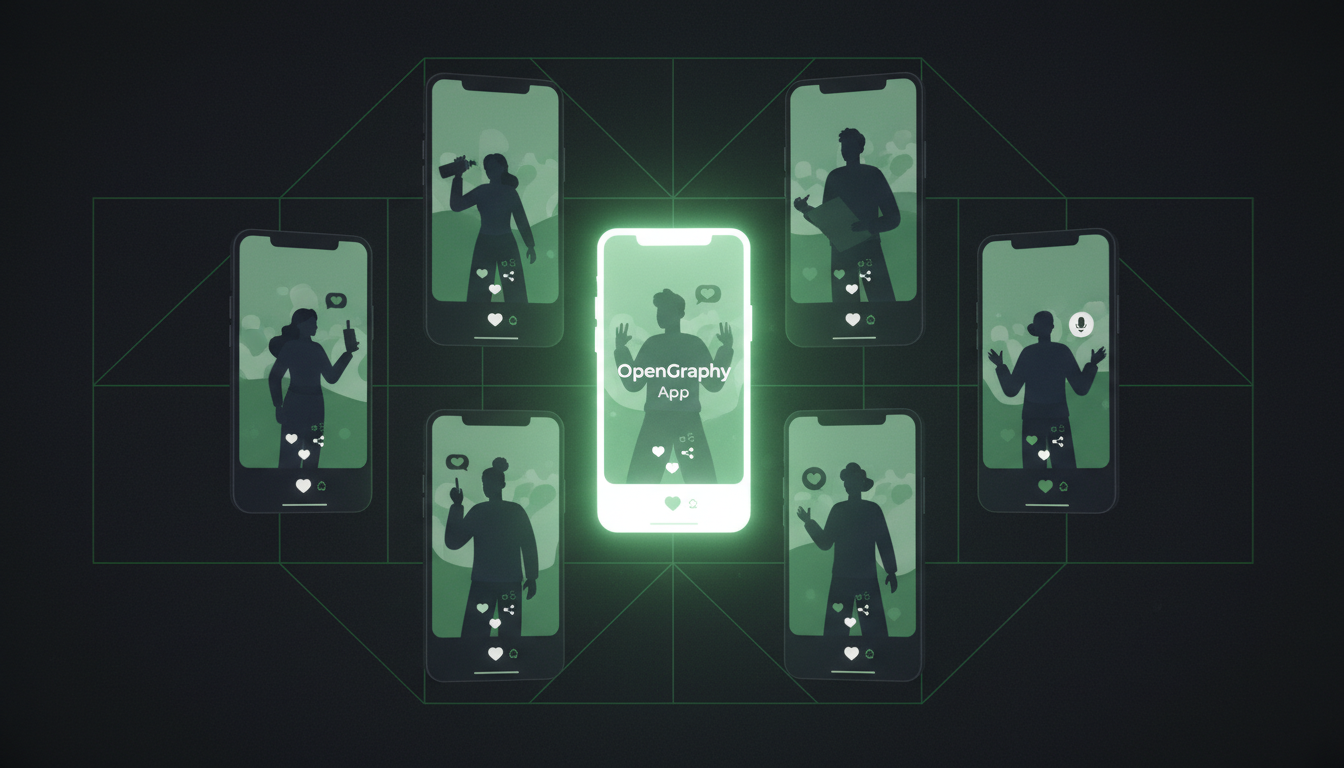
The hardest part of B2B UGC strategy isn't the format — it's producing volume without burning out real customers or sacrificing authenticity. Three production patterns work in 2026.
Pattern 1 — Real customer UGC
Recruit 5–15 real customers willing to record short demo videos in exchange for case-study amplification or referral incentives. Production cost is high per asset; trust value is highest. Reserve for highest-intent stages of the funnel.
Pattern 2 — Internal-team UGC
Your own employees doing casual demos, walkthrough videos, "behind the scenes" content. Cheaper than customer recruitment; trust value sits between customer UGC and brand creative. Most B2B teams under-use this; the talent is already on payroll.
Pattern 3 — AI-generated UGC-style content
The UGC & Influencer Generator produces authentic-feeling vertical content from a brief: synthetic creators, real footage repurposed, demo recreations. Production cost is lowest; volume is highest. The trust ceiling is lower than real-customer UGC, but the floor is much higher than polished brand creative.
The right portfolio
Most B2B teams settle on a 20/30/50 mix: 20% real customer UGC (highest trust), 30% internal-team UGC, 50% AI-generated UGC-style. The mix shifts toward AI-generated content as your library matures and you need volume across more channels.
Formats That Work in B2B UGC
Casual product walkthroughs (60–120 seconds)
"Here's how I use [tool] to do [job]." Vertical 9:16 format. Real screen capture or AI-generated screen recreation. Highest-converting B2B UGC format consistently across audience segments.
"Day in my workflow" content
2–4 minute videos showing how a real (or AI-rendered) operator threads multiple tools together. Excellent for reinforcing your product's role in a broader workflow.
Quick reaction videos
15–30 second responses to industry news, competitor launches, common questions. The cadence requirement is heavy; AI-generated UGC-style is well-suited here.
Customer-quote video clips
Short clips of real customer testimonial audio paired with B-roll. Lower trust ceiling than full UGC but easier to produce at scale.
Measurement: Tying UGC to Pipeline
UGC trust value isn't visible in standard engagement metrics alone. The KPIs that matter for B2B UGC measurement:
- Completion rate — UGC-style content completes 2–3x more often than polished ads. The completion rate gap is the trust differential made visible.
- Save / share rate — buyers share UGC content with stakeholders far more than polished creative. Saves and shares are leading indicators of consideration-stage activity.
- Direct-CTA conversion — UGC content with embedded CTAs converts at 1.5–2x the rate of equivalent polished content. The trust transfers to action.
- Influence on multi-touch attribution — UGC content shows up in multi-touch reports as influence-stage touchpoints far more often than ads. Your CRM model should be measuring this.
FAQ: B2B UGC Strategy
Does UGC really work for B2B?
Yes — and the effect strengthens at higher price points, not weakens. UGC-style content drives measurably higher engagement, completion and conversion across B2B SaaS audiences regardless of ACV.
How do I produce UGC at scale without burning out customers?
20/30/50 portfolio: 20% real customer UGC, 30% internal-team UGC, 50% AI-generated UGC-style content via the UGC & Influencer Generator. The mix shifts toward AI-generated as production volume scales.
Will AI-generated UGC look fake?
Not when configured correctly. Brand DNA injection, realistic creator profiles and platform-native formatting produce content that's indistinguishable from human-recorded creator content for most viewers. See AI Image Generation Tips.
Where should UGC sit in my funnel?
Consideration and evaluation stages primarily. Top-of-funnel awareness still benefits from polished brand creative; bottom-of-funnel close motions benefit from real customer testimonial. UGC fills the high-volume middle.
Is disclosure required for AI-generated UGC?
Increasingly required by platforms (TikTok, Meta) and recommended by the FTC for sponsored or claim-bearing content. Use the platform-native AI-content disclosure flags. Authenticity-signal content can be AI-generated and ethical at the same time.
How does UGC interact with our broader content strategy?
UGC is a format, not a strategy. It pairs with cocon-sémantique pillar content (UGC reinforces the consideration stage; pillars own the awareness and education stages). See Creating Social Media Content at Scale.
Going Further
- Creating Social Media Content at Scale — the broader cadence framework.
- AI Video Production: A Complete Guide — the production layer for video UGC.
- AI Image Generation Tips for Professional Results — the visual quality layer.
- Multi-Channel Publishing Automation — the distribution layer.
- Writing Video Scripts That Convert — the script framework that powers UGC.
Ready to put this into action?
Explore our Content features and start optimizing today