
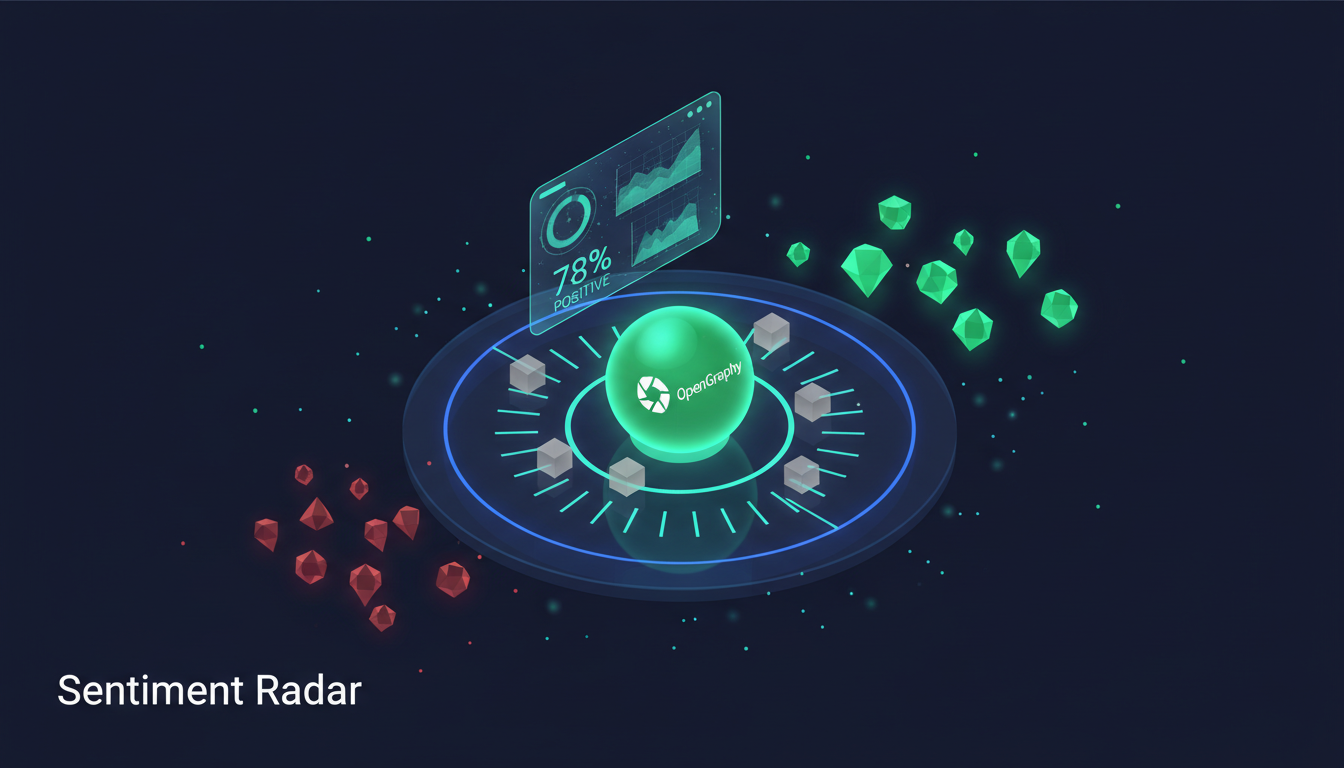
Sentiment Radar
Analysis of how AI models characterize your brand across emotional valence, trust indicators, and recommendation strength.
Sentiment Radar is the multi-dimensional measurement of how AI models describe your brand - positive or negative valence, trust signals, recommendation strength, and risk language. Two brands can have identical Share of Model yet wildly different commercial outcomes because one is described as 'industry leader' and the other as 'controversial alternative'. Sentiment Radar surfaces this hidden tone layer and turns it into an actionable, trackable input.
Key takeaways
- 1Sentiment in AI answers shapes purchase intent more than star ratings used to.
- 2Three axes matter: polarity (positive/negative), recommendation strength, and trust framing.
- 3Sentiment varies by model and by query intent - measure both.
- 4Negative sentiment can persist for months because it's baked into model weights until the next refresh.
- 5Counter-narrative content + earned third-party endorsements are the fastest fixes.
Why Sentiment Radar matters
Positive sentiment in AI responses directly influences purchase intent as consumers increasingly trust AI recommendations over ads.
When to apply Sentiment Radar
Crisis response
After a PR incident, monitor sentiment per query weekly to track recovery and decide when to scale corrective content.
Pre-launch checks
Run sentiment audits on planned campaigns to ensure AI models won't reframe your launch with unintended negative tone.
Competitor differentiation
Identify queries where competitors are described in negative terms and where you're described positively - then double down on those positioning angles.
Best practices
- Score sentiment on a -1 to +1 polarity scale alongside binary recommend/don't-recommend signals.
- Always read sample answers - aggregate scores can hide nuanced framing.
- Watch for hedging language ('controversial', 'mixed reviews') as an early sentiment-decline indicator.
- Pair sentiment with citation source mix - bad sentiment often correlates with one or two negative cited sources.
- Don't try to manipulate sentiment with thin content; models penalize it. Earn it through reviews, case studies, and PR.
Sentiment Radar and OGY
OpenGraphy's Sentiment Radar reads every AI answer about your brand and scores it across polarity, recommendation strength, and trust framing - per model, per query intent. You see at a glance whether ChatGPT is calling you 'category leader' or 'risky alternative,' and which prompts produce the most damaging language. Instead of finding out about a sentiment problem from a sales rep losing a deal, you catch it in the dashboard, trace it to the source content, and fix the framing before it spreads. Ready to see how AI models actually describe your brand? Activate the Sentiment Radar inside OGY and you'll have your first read in minutes.
Scan your brand sentimentSentiment Radar in context
As AI-powered discovery replaces traditional search, understanding Sentiment Radar is a core competency for modern brands. It sits in the GEO & AI Visibility family of concepts and directly influences how language models like ChatGPT, Gemini, Claude, and Perplexity surface, cite, and recommend brands.
Sentiment Radar - frequently asked questions
Quick answers to the questions people most often ask about Sentiment Radar.
Social sentiment is what users say. AI sentiment is what the model says when describing your brand - often more measured and source-blended, but with longer-lasting impact since it sits inside the model's representation.
Negative third-party reviews, unresolved PR incidents indexed during training, lawsuits, or simply a lack of positive content to balance critical sources. The model averages what it has seen.
In retrieval engines (Perplexity, AI Overviews), within weeks once new positive content is published and indexed. In parametric models, only on the next major training refresh - often 3-9 months.
Yes - OpenGraphy's Sentiment Radar runs your tracked queries against each model and scores responses on polarity, recommendation strength, and trust framing in parallel.
Indirectly. Don't argue with the model; instead, publish authoritative content and earn third-party endorsements that will be retrieved or trained on next cycle.
Increasingly yes. Studies show consumers trust AI recommendations more than display ads, especially for high-consideration purchases - positive AI framing is becoming a measurable conversion lever.
Related Terms

Generative Engine Optimization (GEO)
The practice of optimizing content and digital presence to rank highly in AI-generated answers from ChatGPT, Perplexity, Gemini, and similar platforms.

Share of Model (SoM)
A metric measuring how often a brand is cited or recommended in AI-generated answers across multiple AI platforms, replacing traditional Share of Voice.

AI Visibility Score
A composite metric quantifying a brand's presence, authority, and favorability across AI model responses and training data.