
OpenGraphy
OPENGRAPHY

INTELLIGENCE

The reference AI Glossary · 122 concepts · Updated 2026

The AI Glossary
for the AI Search era

122 expert-curated definitions covering Generative Engine Optimization, Share of Model, Knowledge Graphs, AI Agents, and the full vocabulary modern marketing teams need to win in ChatGPT, Gemini, Claude and Perplexity.

🏷️Filter by Category

122 Terms
Total in glossary
7 Categories
Topic areas
Expert-level
Quality content
Large Language Model (LLM) - concept illustration
AI & GenAI

Large Language Model (LLM)

A neural network trained on massive text datasets to understand and generate human-like language, powering tools like ChatGPT, Claude, and Gemini.

Read full definition

Why it matters: LLMs are reshaping how brands appear in AI-generated answers, making traditional SEO tactics obsolete without proper GEO strategies.


Generative AI (GenAI) - concept illustration
AI & GenAI

Generative AI (GenAI)

AI systems that create new content - text, images, video, code - by learning patterns from training data rather than following explicit rules.

Read full definition

Why it matters: GenAI transforms content production from manual creation to intelligent automation, enabling brands to scale output by 10x while maintaining quality.

Token - concept illustration
AI & GenAI

Token

The fundamental unit of text processing in LLMs, typically representing a word, part of a word, or punctuation mark.

Read full definition

Why it matters: Understanding token economics helps optimize content for AI consumption and manage API costs when deploying AI agents at scale.

Prompt Engineering - concept illustration
AI & GenAI

Prompt Engineering

The art and science of crafting instructions to AI models that consistently produce desired outputs through careful wording, context, and examples.

Read full definition

Why it matters: Effective prompt engineering is the foundation of reliable AI agents and determines the quality of automated content generation.

Fine-tuning - concept illustration
AI & GenAI

Fine-tuning

The process of taking a pre-trained model and training it further on specific data to specialize its behavior for particular tasks or brand voices.

Read full definition

Why it matters: Fine-tuning enables brands to create AI agents that consistently match their tone, style, and domain expertise.

RAG (Retrieval Augmented Generation) - concept illustration
AI & GenAI

RAG (Retrieval Augmented Generation)

A technique that enhances LLM responses by retrieving relevant information from external knowledge bases before generating answers.

Read full definition

Why it matters: RAG bridges the gap between static training data and current information, crucial for maintaining factual accuracy in AI-generated content.

Grounding - concept illustration
AI & GenAI

Grounding

The process of connecting AI model outputs to verifiable external sources (like Google Search or a database) to reduce hallucinations and ensure factual accuracy.

Read full definition

Why it matters: Grounding is critical for brand trust, ensuring that AI-generated content cites real data, recent events, and accurate product details rather than inventing facts.

Embeddings - concept illustration
AI & GenAI

Embeddings

Mathematical representations of text, images, or concepts as vectors in multi-dimensional space, enabling semantic similarity comparisons.

Read full definition

Why it matters: Embeddings power semantic search, content recommendations, and help AI understand context beyond keyword matching.

Temperature - concept illustration
AI & GenAI

Temperature

A parameter controlling the randomness of AI outputs; lower values produce more predictable results, higher values increase creativity.

Read full definition

Why it matters: Adjusting temperature allows brands to balance consistency (for factual content) with creativity (for marketing copy).

Context Window - concept illustration
AI & GenAI

Context Window

The maximum amount of text an LLM can process at once, measured in tokens, determining how much information it can consider.

Read full definition

Why it matters: Understanding context limits is crucial for designing effective AI workflows and ensuring complete document processing.

Hallucination - concept illustration
AI & GenAI

Hallucination

When an AI model generates false or fabricated information with confidence, presenting fiction as fact.

Read full definition

Why it matters: Mitigating hallucinations is critical for brand safety and requires validation systems in automated content workflows.

Multimodal AI - concept illustration
AI & GenAI

Multimodal AI

AI systems that process and generate multiple types of data - text, images, audio, video - understanding relationships across modalities.

Read full definition

Why it matters: Multimodal capabilities enable unified content creation workflows where AI coordinates messaging across all content formats.

Model Grounding - concept illustration
AI & GenAI

Model Grounding

The process of connecting AI responses to verifiable sources and factual data, ensuring outputs are traceable and accurate.

Read full definition

Why it matters: Grounding builds trust in AI-generated content by providing citations and preventing the spread of misinformation.

Zero-shot Learning - concept illustration
AI & GenAI

Zero-shot Learning

An AI model's ability to perform tasks it wasn't explicitly trained on by leveraging general knowledge and reasoning.

Read full definition

Why it matters: Zero-shot capabilities make modern LLMs incredibly versatile, reducing the need for task-specific training.

Chain of Thought - concept illustration
AI & GenAI

Chain of Thought

A prompting technique where AI explicitly shows its reasoning process step-by-step before reaching a conclusion.

Read full definition

Why it matters: Chain of thought improves accuracy for complex tasks and makes AI decision-making transparent and debuggable.

AI Alignment - concept illustration
AI & GenAI

AI Alignment

The challenge of ensuring AI systems pursue goals that match human intentions and values, behaving safely and predictably.

Read full definition

Why it matters: Proper alignment ensures AI agents represent brand values accurately and avoid generating inappropriate or harmful content.

Generative Engine Optimization (GEO) - concept illustration
GEO & AI Visibility

Generative Engine Optimization (GEO)

The practice of optimizing content and digital presence to rank highly in AI-generated answers from ChatGPT, Perplexity, Gemini, and similar platforms.

Read full definition

Why it matters: GEO is the new SEO - as AI answers replace search results, visibility in LLM outputs becomes the primary discovery channel for brands.

Share of Model (SoM) - concept illustration
GEO & AI Visibility

Share of Model (SoM)

A metric measuring how often a brand is cited or recommended in AI-generated answers across multiple AI platforms, replacing traditional Share of Voice.

Read full definition

Why it matters: SoM is the #1 KPI for AI Visibility, determining whether your brand exists in the AI-powered decision-making process.

AI Visibility Score - concept illustration
GEO & AI Visibility

AI Visibility Score

A composite metric quantifying a brand's presence, authority, and favorability across AI model responses and training data.

Read full definition

Why it matters: This score predicts your brand's discoverability in the AI-first era where traditional metrics like SERP rankings become irrelevant.

Latent Space - concept illustration
GEO & AI Visibility

Latent Space

The multi-dimensional representation space where AI models encode concepts, determining semantic relationships and proximity between ideas.

Read full definition

Why it matters: Understanding your position in latent space reveals how AI models perceive your brand and which competitors are semantically closest.

Latent Competitors - concept illustration
GEO & AI Visibility

Latent Competitors

Brands that AI models consider related or alternative to yours based on semantic similarity, regardless of traditional market definitions.

Read full definition

Why it matters: These hidden competitors steal mindshare in AI recommendations even if they're not direct business rivals, requiring new competitive analysis.

Model Bias - concept illustration
GEO & AI Visibility

Model Bias

Systematic preferences or blind spots in AI models reflecting imbalances in training data or reinforcement learning feedback.

Read full definition

Why it matters: Understanding model biases helps identify opportunities where established brands are underrepresented and emerging brands can gain traction.

Citation Frequency - concept illustration
GEO & AI Visibility

Citation Frequency

How often an AI model references your brand, content, or expertise when generating answers across different query types.

Read full definition

Why it matters: High citation frequency signals authority to AI systems, creating a compounding effect that increases future recommendations.

Sentiment Radar - concept illustration
GEO & AI Visibility

Sentiment Radar

Analysis of how AI models characterize your brand across emotional valence, trust indicators, and recommendation strength.

Read full definition

Why it matters: Positive sentiment in AI responses directly influences purchase intent as consumers increasingly trust AI recommendations over ads.

AI Stress Tests - concept illustration
GEO & AI Visibility

AI Stress Tests

Systematic evaluation of brand presence across adversarial queries, competitive comparisons, and edge cases in AI responses.

Read full definition

Why it matters: Stress testing reveals vulnerabilities in AI visibility before competitors exploit them or negative perceptions solidify.

Prompt Injection - concept illustration
GEO & AI Visibility

Prompt Injection

Strategic techniques to influence AI model outputs by crafting content that guides how models frame your brand in responses.

Read full definition

Why it matters: Ethical prompt injection through quality content helps models accurately represent your value proposition in generated answers.

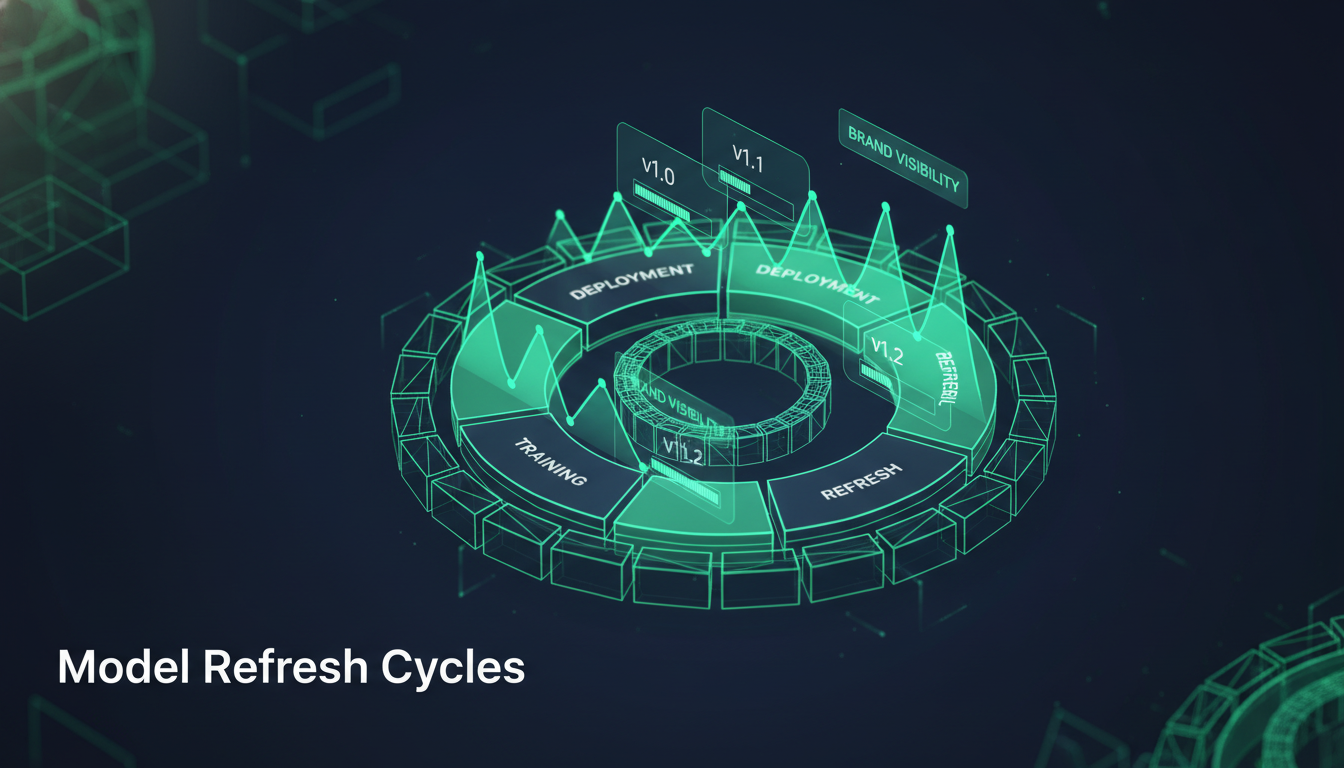
Model Refresh Cycles - concept illustration
GEO & AI Visibility

Model Refresh Cycles

The periodic retraining or fine-tuning of AI models with new data, creating windows where brand perception can shift dramatically.

Read full definition

Why it matters: Timing content campaigns around refresh cycles maximizes impact on your long-term AI visibility and model representation.

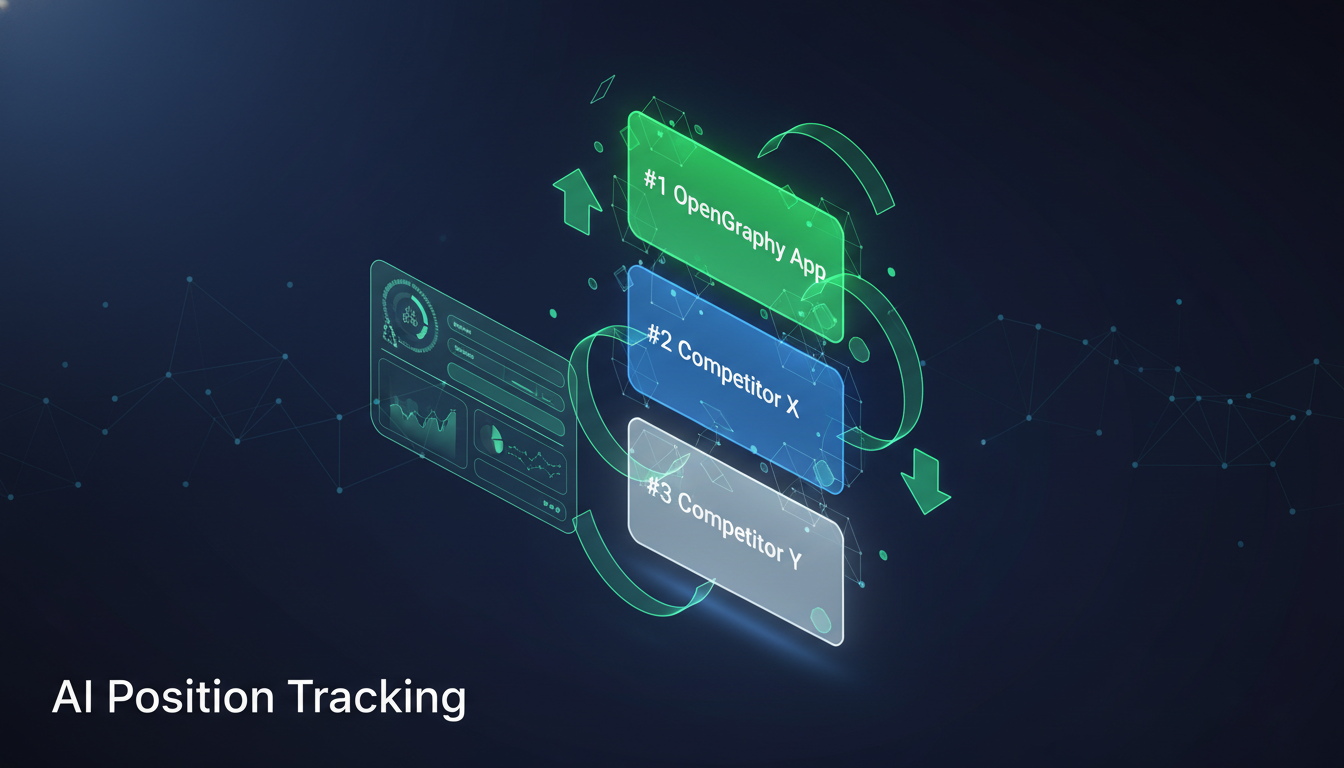
AI Position Tracking - concept illustration
GEO & AI Visibility

AI Position Tracking

Monitoring where and how your brand appears in AI-generated responses across different platforms, queries, and contexts.

Read full definition

Why it matters: Position tracking in AI outputs replaces SERP tracking as the primary competitive intelligence tool for discovery.

Grounding Sources - concept illustration
GEO & AI Visibility

Grounding Sources

The specific content pieces, websites, and knowledge bases that AI models cite when mentioning your brand.

Read full definition

Why it matters: Optimizing grounding sources ensures AI models pull from your best content, not outdated or off-brand materials.

Zero-click Resolution - concept illustration
GEO & AI Visibility

Zero-click Resolution

When AI provides a complete answer without requiring users to visit external websites, keeping traffic within the AI platform.

Read full definition

Why it matters: Brands must optimize for influence within zero-click answers rather than click-through, fundamentally changing content strategy.

Showing 1 - 30 of 122 terms
...

Discover More Features

Transform your AI visibility, content production, and automation with OpenGraphy's comprehensive suite of tools.

AI Visibility

Track your Share of Model, monitor AI citations, and optimize your presence across ChatGPT, Perplexity, and Gemini.

  • AI Visibility Score
  • Share of Model Tracking
  • Latent Competitors
  • Sentiment Radar
  • Knowledge Graph Engine
Explore Features

Content Factory

Generate articles, videos, social posts, and landing pages at scale with AI-powered automation.

  • Article Generator
  • Video Script Generator
  • Social Post Generator
  • Landing Page Generator
  • Image & Video Creation
Explore Features

AI Agents

Deploy autonomous agents for writing, research, social media, publishing, and content scheduling.

  • Writing Agent
  • Research Agent
  • Social Agent
  • Publishing Agents
  • Scheduler Agent
Explore Features

What is AI Visibility?

AI Visibility represents how prominently your brand appears in AI-generated answers across platforms like ChatGPT, Perplexity, Gemini, and Claude. Unlike traditional SEO that focuses on search engine rankings, AI Visibility measures whether AI models cite, recommend, or mention your brand when users ask relevant questions.

In 2026, most users discover brands through AI conversations rather than traditional search results. Share of Model (SoM) - measuring citation frequency across AI platforms - has replaced Share of Voice as the critical discovery metric. Brands with high AI Visibility dominate their categories in the new AI-powered information ecosystem.

Building AI Visibility requires optimizing for how AI models understand and represent your brand. This includes strengthening your knowledge graph presence, creating structured data that machines can parse, and establishing semantic authority in your domain. Traditional link-building and keyword optimization matter far less than entity recognition and topical expertise.

Why GEO matters in 2026?

Generative Engine Optimization (GEO) has emerged as the successor to SEO as AI-powered answer engines fundamentally change how users discover information. Studies show that over 60% of ChatGPT users never click through to external websites - they get complete answers within the chat interface. This "zero-click resolution" means brands must optimize for being cited in AI responses, not just linked.

GEO requires different strategies than SEO. While SEO focused on keywords and backlinks, GEO prioritizes model grounding - ensuring AI systems pull accurate, favorable information about your brand. This involves optimizing content for AI comprehension, building entity relationships in knowledge graphs, and monitoring how different AI models characterize your offerings.

The competitive landscape has shifted dramatically. Brands invisible to AI models lose relevance regardless of their traditional search rankings. Meanwhile, AI-native brands that optimize for latent space positioning and citation frequency gain disproportionate visibility. As Google integrates AI Overviews and Bing deploys GPT-4, GEO becomes the primary growth channel for forward-thinking marketers.

How Agents transform content operations?

AI Agents represent the evolution from AI as a tool to AI as an autonomous teammate. Unlike traditional automation that follows rigid scripts, agents perceive their environment, make decisions, and adapt their behavior to achieve goals. This transformation enables content operations to scale from dozens to thousands of assets monthly without proportional team growth.

Modern content factories deploy specialized agents in orchestrated workflows. A research agent gathers competitive intelligence and trending topics. A writing agent creates on-brand content adhering to style guidelines. A GEO agent optimizes outputs for AI visibility. Finally, a publishing agent distributes content across channels at optimal times. This agent orchestration compresses what once took weeks into minutes.

The key advantage is learning and adaptation. Agents with memory systems improve over time, understanding what content performs well and refining their outputs. Human-in-the-loop (HITL) design ensures quality control while maintaining throughput. As agents handle routine content creation, human teams focus on strategy, creative direction, and relationship building - the work only humans can do well.

Ready to dominate AI visibility?

Start tracking your Share of Model, generating AI-optimized content, and deploying autonomous agents today.

Get Started Free